 superbrickGet the app ↗
Start with the figure you actually own
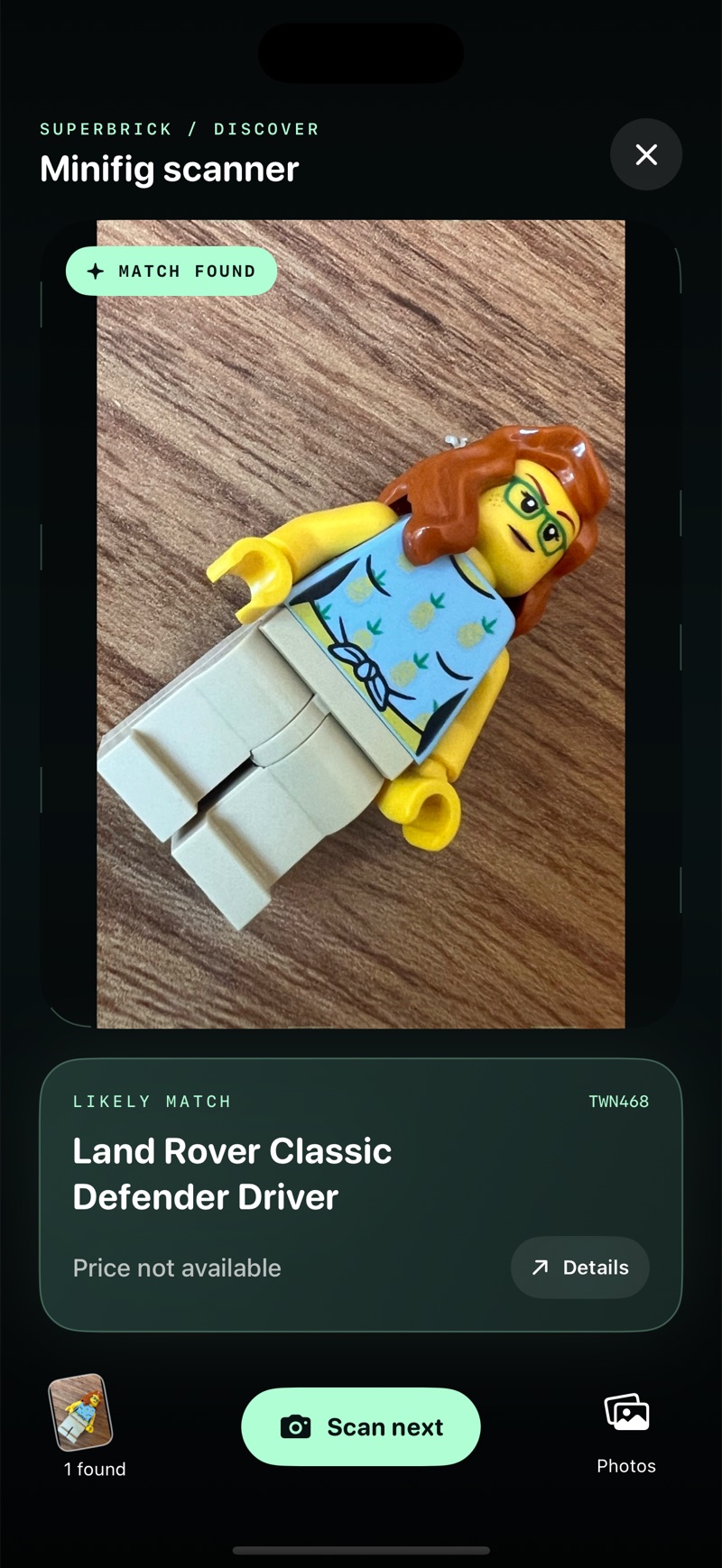
A character name is not enough for a useful valuation. A different face, torso print, cape or pair of legs can change the catalog entry you should compare. Photograph the complete figure, review the possible match and keep its catalog ID with your research.
If the head or legs have been swapped, a price for the complete original figure may not fit what you have. Resolve the identity before using a number.
What a scan result can tell you
The example recorded in Superbrick shows twn468, Land Rover Classic Defender Driver, with Price not available. You can still compare the suggested identity and save a confirmed match. The missing estimate means there is no quote to use in that result, not that the figure has no value.
When an estimate is available, check its currency and whether it describes a new or used figure. Superbrick’s price coverage varies, and Pro price insights are separate from the initial scan allowance.
Use a condition and completeness checklist
| Check | Why it changes the comparison |
|---|---|
| Head, torso and legs | Confirm the expected variant and look for cracks, loose joints or worn printing. |
| Helmet, hair and cape | Compare the components with the catalog entry; do not assume a similar replacement is equivalent. |
| Accessories | Read what the reference includes. An accessory in a listing photo may not be included in every comparison. |
| New versus used | Follow the source’s condition definitions instead of treating an opened figure as sealed. |
| Currency, date and source | Keep these together so you do not compare different markets or an old reference as if it were current. |
Separate asking prices, sales and estimates
An asking price tells you what a seller wants. A completed sale records a transaction, but its condition and contents still need checking. An app estimate provides context from available data; it is not an offer to buy your figure.
Compare several relevant references when possible. One unusually high listing does not establish the value of every copy. If there are few comparable sales or the exact variant is uncertain, keep that uncertainty in your range instead of filling the gap with a confident number.
Add up the figures you can price
For illustration, suppose two confirmed loose figures each have a relevant reference estimate of $12. Their reference subtotal is 2 × $12 = $24. These are teaching numbers, not a current quote for twn468 or any other real figure.
A third figure with no coverage remains unpriced. Report “$24 for the two priced figures, plus one unpriced figure.” If you sell, fees, shipping and a buyer’s offer can change what you receive. If the figures are already included in a complete-set valuation, do not add them a second time.
Questions collectors ask
Can I scan a LEGO minifigure for its value?
A photo scan helps identify the figure and may show an available estimate. It cannot guarantee a match, a price for every figure or what a buyer will pay.
Is a rare figure always expensive?
A rarity claim alone is not a valuation. Confirm the exact entry and look for relevant market evidence instead of inferring a price from a label.
Where can I keep the figure after checking it?
Save a confirmed figure in Superbrick and keep loose copies separate from figures already included in complete sets. Price insights and purchase options are shown in the app.